We’ve lived our mission since 1952.
Our story
1950s
ASIS was formed in 1952.
The Service’s mission focused on collecting overseas intelligence, primarily in the Asia-Pacific.
In 1954, ministerial authority for ASIS shifted to what we now call the Minister for Foreign Affairs.
1950s
ASIS was formed in 1952.
The Service’s mission focused on collecting overseas intelligence, primarily in the Asia-Pacific.
In 1954, ministerial authority for ASIS shifted to what we now call the Minister for Foreign Affairs.

1970s
For over 20 years, the existence of the Service remained a secret.
ASIS was first referred to in Parliament in 1975, though was not officially acknowledged until 1977. Prime Minister Malcolm Fraser informed Parliament that, ‘ASIS’s capacity to serve Australia’s national interest will continue to depend on its activities being fully protected by secrecy.’
1970s
For over 20 years, the existence of the Service remained a secret.
ASIS was first referred to in Parliament in 1975, though was not officially acknowledged until 1977. Prime Minister Malcolm Fraser informed Parliament that, ‘ASIS’s capacity to serve Australia’s national interest will continue to depend on its activities being fully protected by secrecy.’
1980s
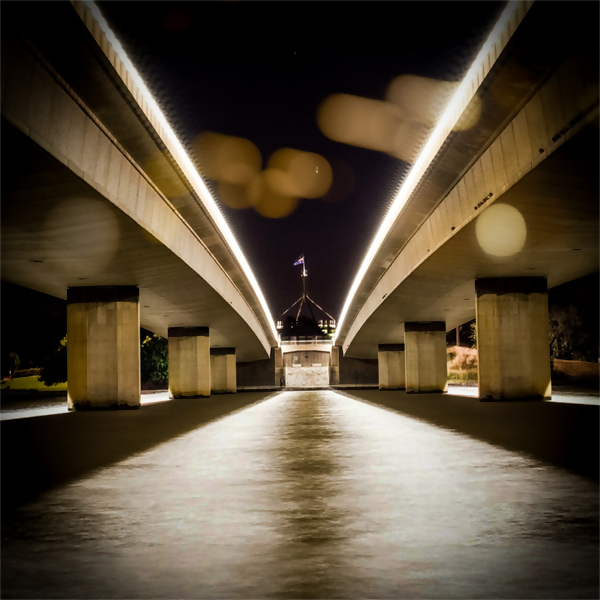
ASIS moved from its headquarters in Melbourne to Canberra.
1980s
ASIS moved from its headquarters in Melbourne to Canberra.
2000s
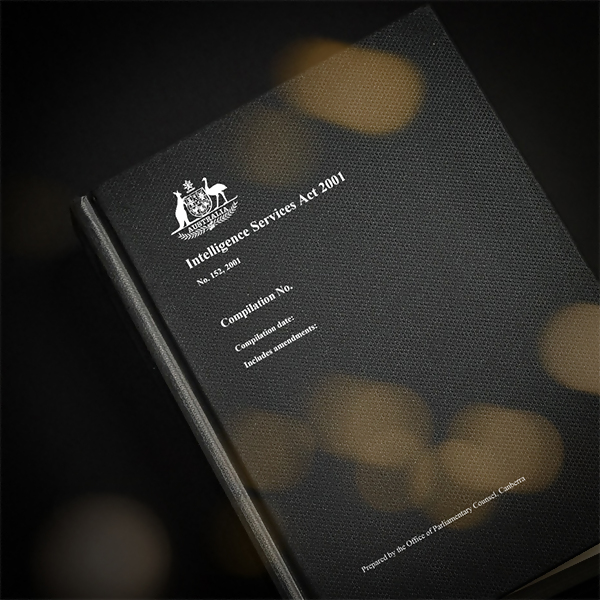
The Intelligence Services Act 2001 (‘the ISA’) came into force.
The ISA provided a legal framework for ASIS and, for the first time, made public the Service’s functions and limits – namely, that ASIS’s primary role is to produce secret intelligence from human sources overseas.
Additional tasks can be added to the mandate, as directed by the government.
2000s
The Intelligence Services Act 2001 (‘the ISA’) came into force.
The ISA provided a legal framework for ASIS and, for the first time, made public the Service’s functions and limits – namely, that ASIS’s primary role is to produce secret intelligence from human sources overseas.
Additional tasks can be added to the mandate, as directed by the government.

2010s
A 2017 review into Australia’s intelligence community found that Australia’s intelligence agencies were highly capable and held in high regard by their international counterparts.
To ensure the intelligence community was best-placed to meet the challenges of the coming decades, the review made a series of recommendations.
Among them was the establishment of the Office of National Intelligence (ONI) and the formation of the National Intelligence Community (NIC), of which ASIS is a part.
2010s
A 2017 review into Australia’s intelligence community found that Australia’s intelligence agencies were highly capable and held in high regard by their international counterparts.
To ensure the intelligence community was best-placed to meet the challenges of the coming decades, the review made a series of recommendations.
Among them was the establishment of the Office of National Intelligence (ONI) and the formation of the National Intelligence Community (NIC), of which ASIS is a part.

2020s
In 2021, for the first time since ASIS’s founding, the Service officially declared its Deputy Directors-General.
In 2024, the Independent Intelligence Review recognised the complex strategic challenges confronting Australia. In this context, ASIS continues to transform – remaining agile and focused on enhancing its unique role in supporting the government.
2020s
In 2021, for the first time since ASIS’s founding, the Service officially declared its Deputy Directors-General.
In 2024, the Independent Intelligence Review recognised the complex strategic challenges confronting Australia. In this context, ASIS continues to transform – remaining agile and focused on enhancing its unique role in supporting the government.